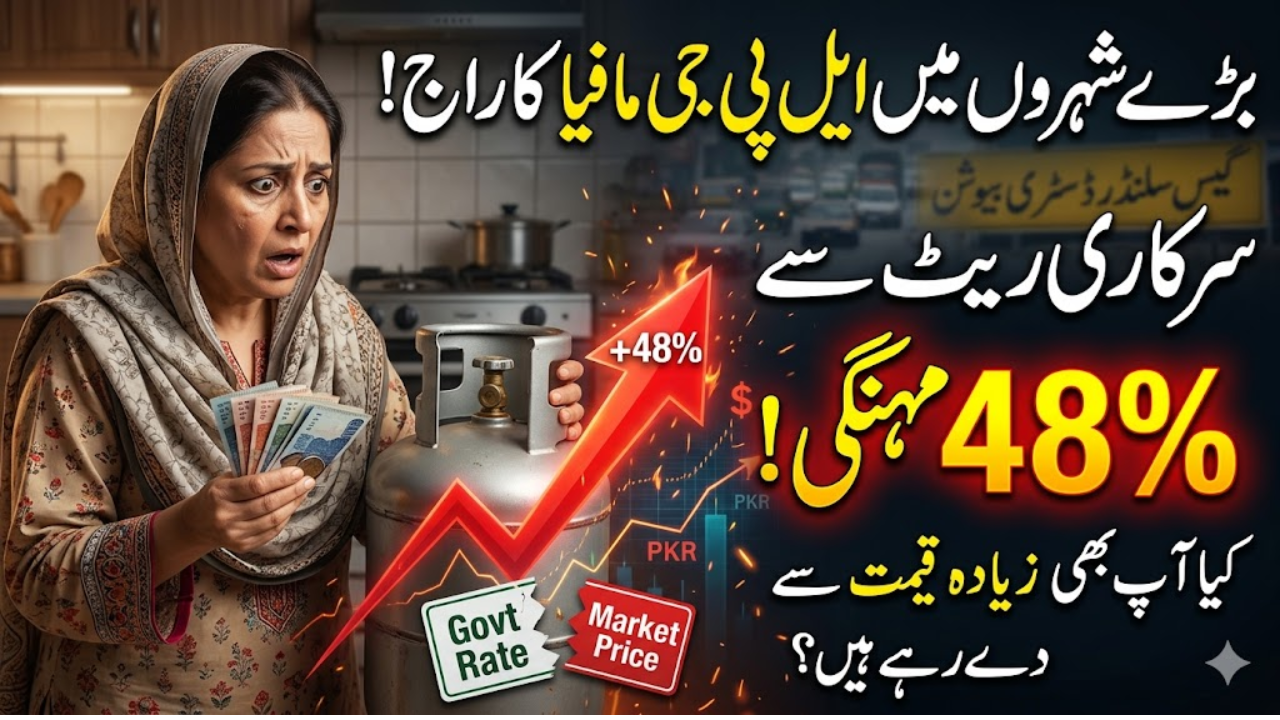
Why Are LPG Prices Surging 48% Above
Why Are LPG Prices Surging 48% Above: Liquefied petroleum gas has become one of the most essential household fuels in Pakistan, especially in urban centers where natural gas supply remains inconsistent. Over the past few months, consumers in major cities have been facing an unexpected and sharp increase in LPG rates, with prices climbing far beyond the officially notified levels. This widening gap has triggered concern among households, small businesses, and policymakers alike.

The situation is particularly alarming because LPG is widely used by low- and middle-income families for cooking and heating. When prices surge significantly above the government benchmark, it creates a ripple effect on household budgets. In big cities, where living costs are already high, this additional burden is pushing many families toward financial stress and forcing them to cut down on essential consumption.
You Can Also Read: CM Punjab Dhee Rani Scheme 2026 Registration Latest Updates
| Key Factor | Summary & Details |
|---|---|
| The Core Issue | Retail LPG prices have surged up to 48% above OGRA’s official benchmark rates in major cities. |
| Primary Causes | Limited natural gas supply driving up urban demand, plus reliance on expensive imported LPG. |
| Market Failures | Supply chain disruptions, high transport costs, black marketing, and hoarding by distributors. |
| Regulatory Gaps | Weak government enforcement at the retail level and a lack of pricing transparency from marketing companies. |
| Public Impact | Severe financial strain on low/middle-income families, forcing some to use hazardous alternatives like wood or coal. |
| Future Outlook | Prices will remain volatile without strict government regulation, supply chain improvements, and anti-hoarding penalties. |
OGRA LPG Rate vs Market Price Gap Explained
The role of the Oil and Gas Regulatory Authority is to regulate petroleum product prices, including LPG, to ensure affordability and market stability. However, a major disconnect has emerged between the official rate and the price consumers actually pay in the market. This disparity reflects deeper structural issues within the LPG supply chain.
While the regulatory authority sets a benchmark price based on production and import costs, the market often operates on different dynamics. Factors such as transportation costs, distribution inefficiencies, and speculative pricing contribute to a higher retail rate. As a result, consumers are left dealing with prices that are significantly inflated compared to the official notification.
Key Factors Behind LPG Price Increase in Cities
Several underlying reasons have contributed to the sudden rise in LPG prices across major urban centers. These factors are interconnected and highlight the complexity of the energy supply system in Pakistan.
- High demand for LPG in cities due to limited natural gas availability
- Supply chain disruptions affecting timely delivery of cylinders
- Increased transportation and logistics costs
- Market manipulation by large distributors and suppliers
- Weak enforcement of official pricing regulations
- Dependence on imported LPG linked to global fuel price trends
You Can Also Read: A Big Change for LESCO Consumers Prepaid Electricity Meters Are Coming
Supply Chain Issues Driving LPG Price Surge
One of the biggest contributors to rising LPG prices is inefficiency within the supply chain. From production or import to final delivery at retail outlets, multiple intermediaries are involved. Each step adds cost, and in many cases, these costs are not transparent or regulated effectively.
Urban areas, despite being closer to distribution hubs, often face irregular supply due to logistical bottlenecks. Delays in transportation or shortages at storage facilities can lead to artificial scarcity. When supply tightens, prices naturally rise, and retailers are forced to pass on these costs to consumers.
LPG Demand Growth and Consumption Pressure
Pakistan’s growing population and increasing urbanization have led to a sharp rise in energy demand. LPG consumption has surged as more households rely on it as a primary or backup fuel source. This growing demand is putting pressure on an already strained supply system.
In large cities, the demand is even higher due to the limited availability of pipeline gas. Restaurants, street vendors, and small industries also rely heavily on LPG, further increasing consumption levels. When demand consistently outpaces supply, price hikes become almost inevitable.
You Can Also Read: Breaking News! Govt Fuel Subsidy Plan for Motorcyclists and Public Transport
Role of LPG Marketing Companies in Price Hike
Another critical aspect of the price surge is the role played by LPG marketing and distribution companies. Retailers often claim that they receive LPG cylinders at already elevated prices, leaving them with little choice but to sell at higher rates to maintain margins.
- Marketing companies control bulk supply and pricing trends
- Retailers depend on suppliers for daily stock availability
- Price variations often originate at the wholesale level
- Smaller vendors have limited bargaining power
- Lack of transparency in pricing structure benefits large players
Impact of LPG Price Hike on Low-Income Households
The rising cost of LPG is affecting millions of households, especially those belonging to lower-income groups. For many families, LPG is not just an alternative fuel but the only available option for daily cooking needs.
As prices continue to climb, families are forced to reduce usage or switch to less efficient and more hazardous alternatives such as firewood or coal. This not only affects their quality of life but also poses health and environmental risks. The financial strain caused by expensive LPG is making it increasingly difficult for vulnerable groups to manage their monthly expenses.
Government Price Control Challenges in Energy Sector
Regulating energy prices in a complex market like Pakistan is a challenging task. While authorities set official rates, enforcement remains weak, particularly at the retail level. This allows market forces to dominate pricing, often at the expense of consumers.
Monitoring thousands of retailers across multiple cities is a logistical challenge. Additionally, when large distributors operate without strict oversight, it becomes difficult to ensure compliance with official rates. This gap between policy and implementation is one of the main reasons behind persistent price discrepancies.
You Can Also Read: BISP 8171 Installment Reactivation 2026 Process Complete Guide
LPG Black Marketing and Market Inefficiencies
Another major issue contributing to high LPG prices is black marketing and hoarding. In times of high demand or limited supply, some market players exploit the situation by artificially inflating prices.
These practices create an uneven market where consumers are left with no option but to pay inflated rates. The lack of strict penalties and effective monitoring further encourages such behavior. As long as these inefficiencies exist, achieving price stability will remain a challenge.
Future Outlook of LPG Prices in Pakistan
Looking ahead, the outlook for LPG prices remains uncertain. Several factors, including global energy trends, local supply conditions, and government policies, will determine the direction of prices in the coming months.
- Continued reliance on imported LPG may keep prices volatile
- Urban demand is expected to rise further with population growth
- Policy reforms could help stabilize the market if implemented effectively
- Improved supply chain management may reduce price fluctuations
- Stronger regulation could bridge the gap between official and market rates
You Can Also Read: Breaking: LPG Price Hits Rs 304/kg! How Much Will Your Cylinder Cost Now?
Conclusion
The sharp increase in LPG prices across major cities is the result of multiple interconnected factors, ranging from supply chain inefficiencies to weak regulatory enforcement. While the official rate aims to provide relief, the ground reality reflects a different picture where consumers are forced to pay significantly higher prices.
Addressing this issue requires a comprehensive approach that includes better regulation, transparent pricing mechanisms, and improved supply chain management. Without these reforms, the gap between official and market prices will likely persist, continuing to burden households and small businesses across Pakistan.