
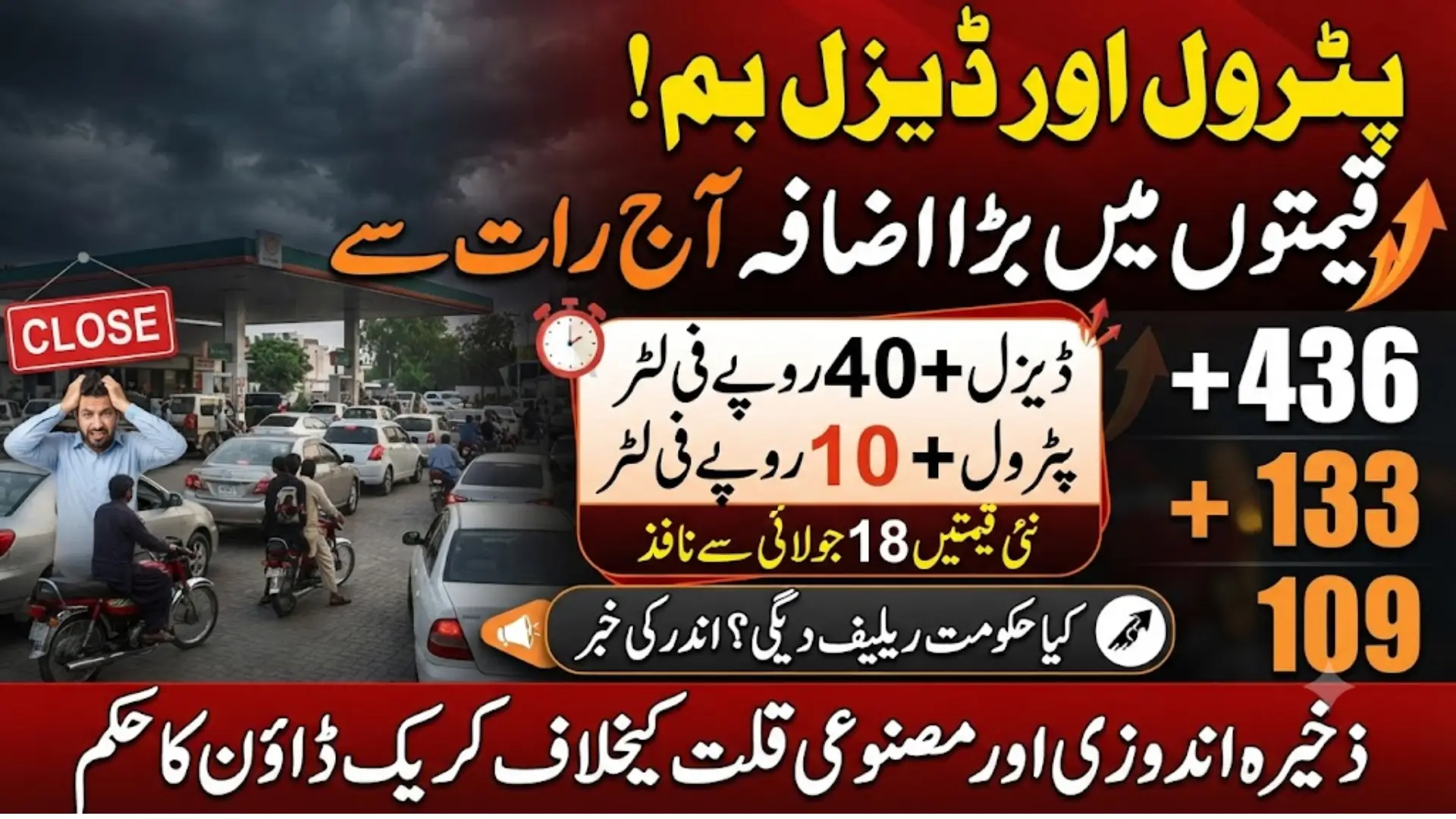
Petrol and Diesel Prices May Increase Today
Petrol and Diesel Prices May Increase Today: Petrol and diesel prices in Pakistan are set to rise from July 18, with high-speed diesel expected to jump by around Rs. 40 per litre and petrol likely to go up by nearly Rs. 10 per litre. The hike comes as global oil prices climb, though the government is reportedly weighing a cut in the petroleum levy to soften the blow for consumers.
Diesel Set for the Biggest Jump
High-speed diesel is expected to take the heaviest hit in the upcoming fortnightly review. Early estimates point to an increase of roughly Rs. 40 per litre, a jump that would directly affect transport fares, freight costs, and the price of everyday goods across the country Since diesel powers most heavy vehicles, buses, and agricultural machinery, a spike of this size tends to ripple through the entire supply chain within days of taking effect.

Petrol Prices Also Expected to Climb
Along with diesel, petrol is likely to become costlier by close to Rs. 10 per litre once the new prices are notified this would mark another squeeze on household budgets, especially for daily commuters who rely on motorbikes and cars for work and school runs the new rates are expected to be officially announced and implemented starting July 18, in line with the routine fortnightly pricing cycle followed by the petroleum division.
You Can Also Read: FBISE 9th Class Result 2026 Check Federal Board
Why Fuel Prices Are Going Up Again
The main driver behind this expected increase is a rise in international crude oil rates, which directly influence how much Pakistan pays to import petroleum products. Since local fuel pricing is closely tied to global markets and exchange rate movements, any upward swing abroad usually translates into higher pump prices at home within a couple of weeks Officials have not ruled out further volatility, noting that global energy markets remain unpredictable heading into the second half of the year.
| Fuel Update | Details |
|---|---|
| Petrol | May increase by around Rs. 10/litre |
| High-Speed Diesel | May increase by around Rs. 40/litre |
| Expected Date | July 18 |
| Main Reason | Higher global oil prices |
| Possible Relief | Petroleum levy may be reduced |
| Supply Situation | Authorities monitoring possible hoarding |
Government May Trim Petroleum Levy
To ease pressure on consumers, authorities are reportedly considering a reduction in the petroleum levy charged on fuel sales. This adjustment would not eliminate the price hike entirely but could help limit how sharply pump prices rise for the general public A final decision on the levy is expected to be announced alongside the new fuel prices.
Key Points From the Latest Fuel Price Review
- Diesel could rise by close to Rs. 40 per litre in the new pricing cycle
- Petrol may increase by around Rs. 10 per litre from July 18
- Global crude oil prices are the primary reason behind the expected hike
- A cut in the petroleum levy is under consideration to soften the impact
- New rates are expected to be notified and enforced from July 18 onward
- Further changes may follow depending on international oil market trends
You Can Also Read: Punjab SED Opens New STI Teaching Jobs Across Rawalpindi Division
Diesel Hoarding Reports Surface Ahead of Hike
Ahead of the anticipated price jump, several regions have reported unusual diesel shortages at filling stations, with some dealers allegedly holding back stock in anticipation of selling at higher rates later. This has led to temporary supply gaps in certain areas even though overall national fuel reserves remain stable.
Regulatory bodies have flagged a noticeable spike in fuel sales during the first half of July, well above typical consumption patterns, which points toward speculative stockpiling rather than genuine demand growth.
Signs Regulators Are Watching For
- Sudden, unexplained surge in fuel sales at the dealer level
- Filling stations reporting shortages despite adequate national supply
- Irregular stock movement patterns flagged during market checks
- Distributors allegedly withholding diesel ahead of the price change
- Complaints of long queues or empty pumps in specific localities
- Reports of selective supply disruptions in certain provinces
You Can Also Read: Punjab Government Bans Summer Camps in Schools During Holidays
Authorities Step In to Curb Artificial Shortages
A high-level meeting brought together oil sector regulators and industry representatives to review the emerging supply situation. The discussion focused on separating genuine demand from speculative hoarding and ensuring that everyday consumers are not affected by artificial shortages created ahead of the price revision.
Following the meeting, directions were issued to tighten monitoring of the fuel supply chain and take firm action against any party found creating artificial scarcity or disrupting the normal flow of petroleum products.
Measures Being Taken to Protect Supply
- Stronger market surveillance ordered across fuel distribution networks
- Provincial authorities directed to inspect filling stations and depots
- Action promised against dealers found hoarding or overcharging
- Oil marketing companies instructed to keep supply chains running smoothly
- Consumers advised against panic buying amid the price uncertainty
- Assurance given that national petroleum stocks remain sufficient for demand
You Can Also Read: Saudi Arabia Announces June 30 Deadline for Expired Work Permit Renewals
What This Means for Everyday Consumers
For ordinary households, the upcoming revision means higher transport and commuting costs are likely within days, along with a possible knock-on effect on the prices of goods that depend on road freight. Motorists and commercial vehicle owners are being encouraged to plan fuel purchases sensibly rather than rushing to stock up, since panic buying itself can worsen temporary shortages.
While a lower petroleum levy could soften the final impact, most analysts expect both petrol and diesel to end up noticeably more expensive once the new prices take effect on July 18, keeping fuel costs a key concern for consumers in the weeks ahead.