
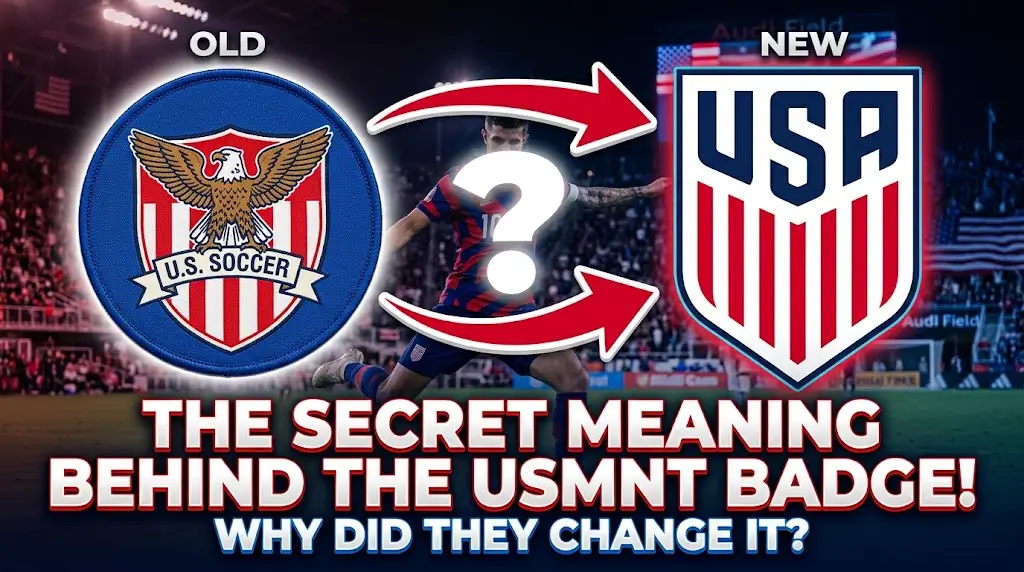
USMNT Badge History What Does It Really Mean?
The USMNT badge is more than a logo placed on the shirt of the United States men’s national soccer team. It represents the country, the growth of soccer in America, generations of players, major international tournaments, and the changing identity of American soccer. Over the years, the badge has gone through visual changes as the national team developed from a relatively minor presence in American sports into a recognizable force on the international soccer stage.
The history behind the USMNT badge is closely connected to the history of soccer in the United States. As the sport became more popular, the national team needed an identity that could connect American fans with the players representing the country. The badge gradually became part of that identity, appearing on jerseys, flags, merchandise, broadcasts, and memorable moments at international competitions.
Early US Soccer Badge Origins
The earliest identity of the American national team was not as consistent or commercially recognizable as the modern USMNT image. Soccer occupied a much smaller place in American sports culture, and national-team branding naturally reflected that situation. Uniforms and visual symbols changed over different periods, while the national team itself struggled to establish a permanent place among the country’s major sporting institutions.
As interest in soccer increased, the badge became more important. A national-team emblem has a different role from a club logo because it represents an entire country rather than one city, organization, or group of supporters. The American soccer badge therefore had to communicate national identity while also becoming recognizable to audiences watching the team against international opponents.
You Can Also Read: Petrol and Diesel Prices May Increase Today as Fresh Fuel Price
Meaning Behind the USMNT Crest
The meaning behind the USMNT crest comes largely from its connection with American national identity. The colors associated with the team have traditionally reflected the country’s red, white, and blue palette, creating an immediate visual connection with the United States.
Stars have also played an important symbolic role in American sports imagery. Their presence can evoke the national flag and the country’s broader identity. When these elements appear within the visual language of the national team, they help make the badge recognizable as an American symbol even when it is displayed away from a soccer field.
The badge therefore works on two levels. It identifies the players as members of the national team, while also giving supporters a visual symbol through which they can express their connection to American soccer.
How the USMNT Logo Evolved
The evolution of the USMNT logo reflects the changing position of soccer in American culture. As the sport gained more followers and the national team appeared more regularly in major international competitions, its visual identity became increasingly important.
Modern sports branding also influenced this development. A contemporary badge needs to work on a soccer jersey, television graphics, websites, mobile screens, social media posts, merchandise, and other digital formats. This has encouraged national teams to develop designs that remain recognizable even when displayed at very small sizes.
For the USMNT, this evolution happened alongside broader changes in American soccer. The growth of professional soccer, greater youth participation, and the increasing number of American players competing abroad all helped create a stronger audience for the national team.
You Can Also Read: FBISE 9th Class Result 2026 Check Federal Board SSC Part 1 Result Online
Stars and American Soccer Identity
Stars are among the most recognizable visual references associated with American national identity. Their connection with the country’s flag makes them particularly useful in sports branding, where a symbol must communicate its meaning quickly.
The use of patriotic colors and star imagery gives the national-team identity a direct connection to the country it represents. However, the meaning of the badge is not limited to patriotism. For supporters, it can also represent memories of matches, tournaments, players, and personal experiences connected to following the USMNT.
This is why even relatively small design changes can attract attention. Fans do not necessarily see the badge as an isolated graphic. They associate it with the history they have experienced while supporting the team.
Key USMNT Badge Features
Several visual and cultural elements have helped shape the identity of the American men’s national team. Some have remained recognizable through different eras, while others have changed as the federation and the sport developed.
- Red, white, and blue connect the badge with American national identity.
- Stars provide a recognizable reference to the United States.
- The emblem distinguishes the national team from American soccer clubs.
- Jersey designs have helped different generations remember the badge.
- International tournaments increased global visibility for the symbol.
- Digital media made the crest easier to recognize among younger fans.
USMNT Crest and World Cup History
The FIFA World Cup has played a major role in the development of the USMNT’s public identity. Every appearance places the national team’s badge in front of a global audience through television, online coverage, photographs, merchandise, and stadium displays.
For supporters, the badge can become connected to specific World Cup memories. A particular generation might remember a tournament because of a dramatic match, a famous player, or a distinctive jersey. The emblem becomes part of those memories because it is present throughout the team’s journey.
World Cup participation also gives the badge international recognition. When American players compete against established soccer nations, the crest appears alongside some of the most famous national-team identities in the sport.
Why the Badge Matters to USMNT Fans
For fans, the national-team badge represents belonging. Club soccer divides supporters among different cities, teams, leagues, and traditions. A national team creates a different kind of connection because it brings those separate groups together under one identity.
Someone may support a particular MLS club, follow an American player overseas, or enjoy European soccer during the club season. When the USMNT plays, however, the badge represents the country rather